Capacitor Reference - PowerBook Duo 230
The Duo 230 must be fully recapped. Running one on original caps introduces a high risk of the cap goo causing a short circuit, leading to the logic board being permanently destroyed.
Do not replace the LCD caps with ceramic capacitors. They may work, but have been shown to result in drifting contrast on certain LCD displays. This is caused by ceramic capacitors' characteristic where the capacitance varies based on voltage load.
Logic Board
Note: Earlier Duo motherboards use a 100uf 10v capacitor in place of the 100uf 25v capacitor. Replacing with higher voltage is fine, so you can just order a 25v cap for either board revision.
| Value | Count | Type | Diameter | Height |
|---|---|---|---|---|
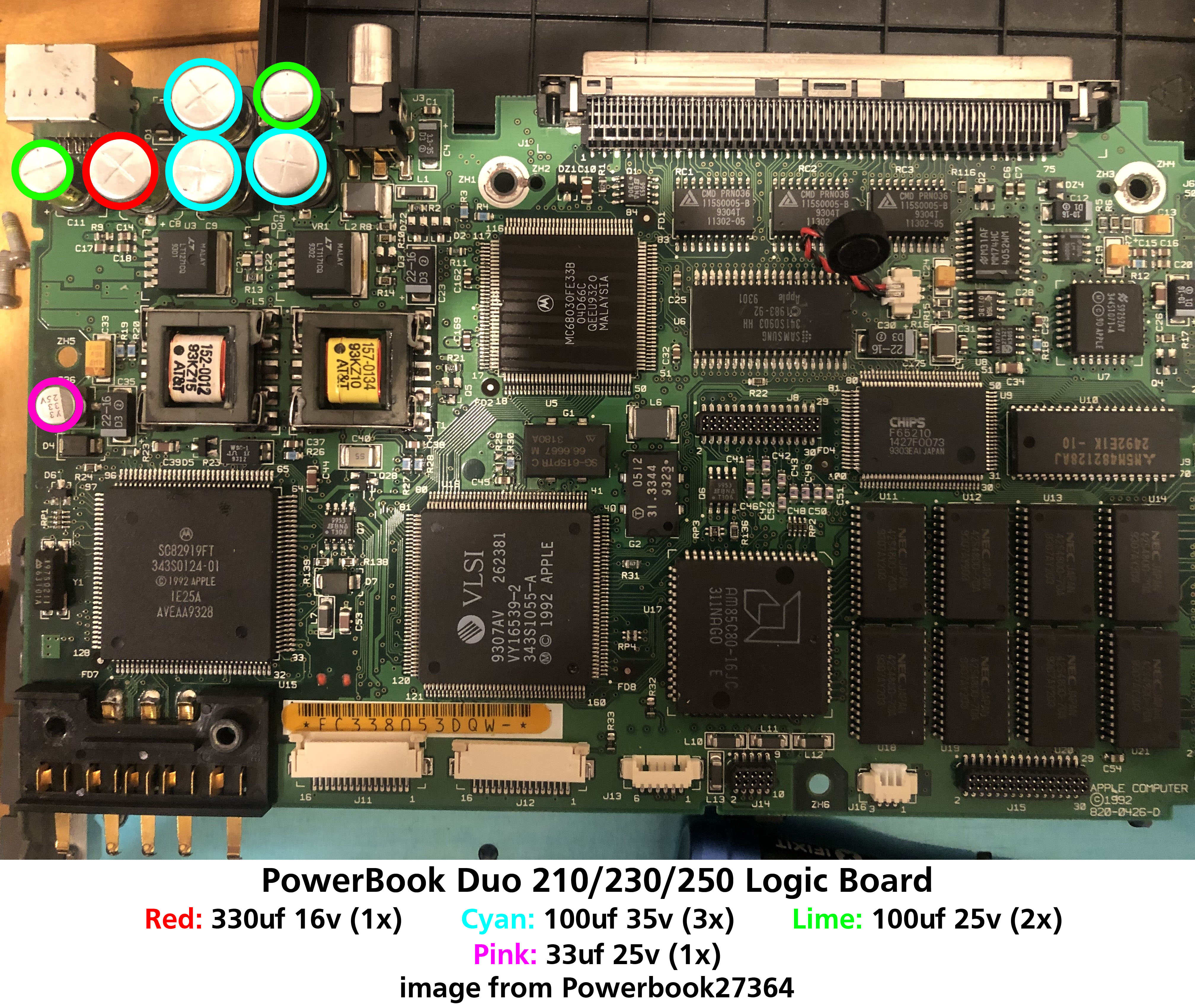
| 330uf 16v | 1 | Surface-Mount Electrolytic | 10mm | 10mm |
| 100uf 35v | 3 | Surface-Mount Electrolytic | 10mm | 10mm |
| 100uf 25v | 2 | Surface-Mount Electrolytic | 8mm | 10mm |
| 33uf 25v | 1 | Surface-Mount Electrolytic | 6mm | 6mm |
Reference Image
LCD
| Value | Count | Type |
|---|---|---|
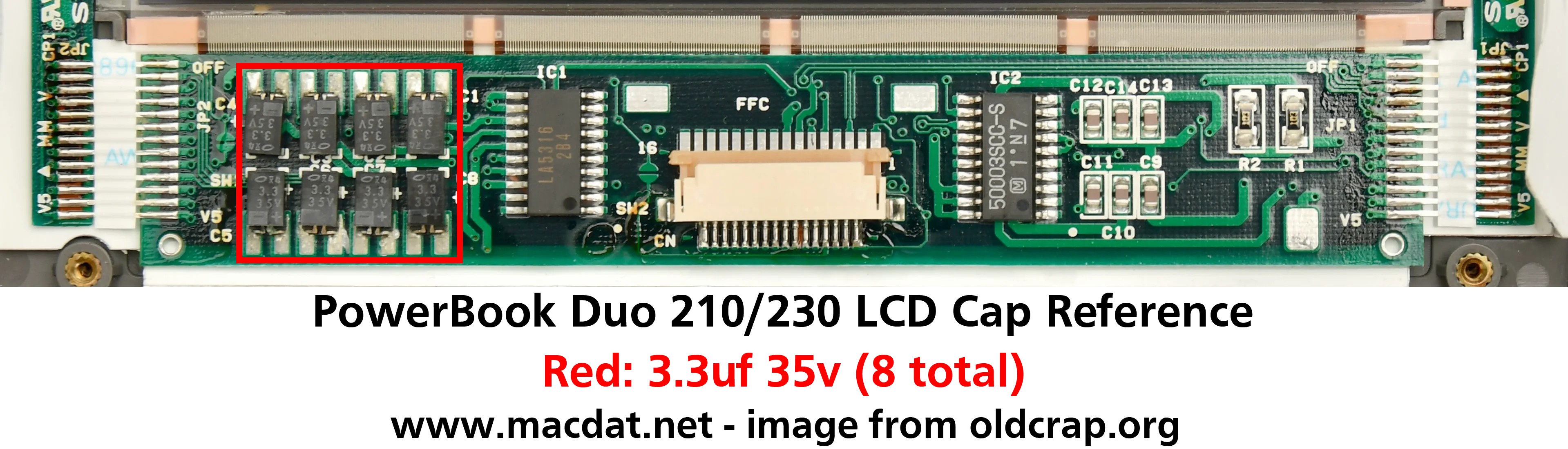
| 3.3uf 35v | 8 | Low Profile Surface-Mount Electrolytic |
Reference Image
Trackball
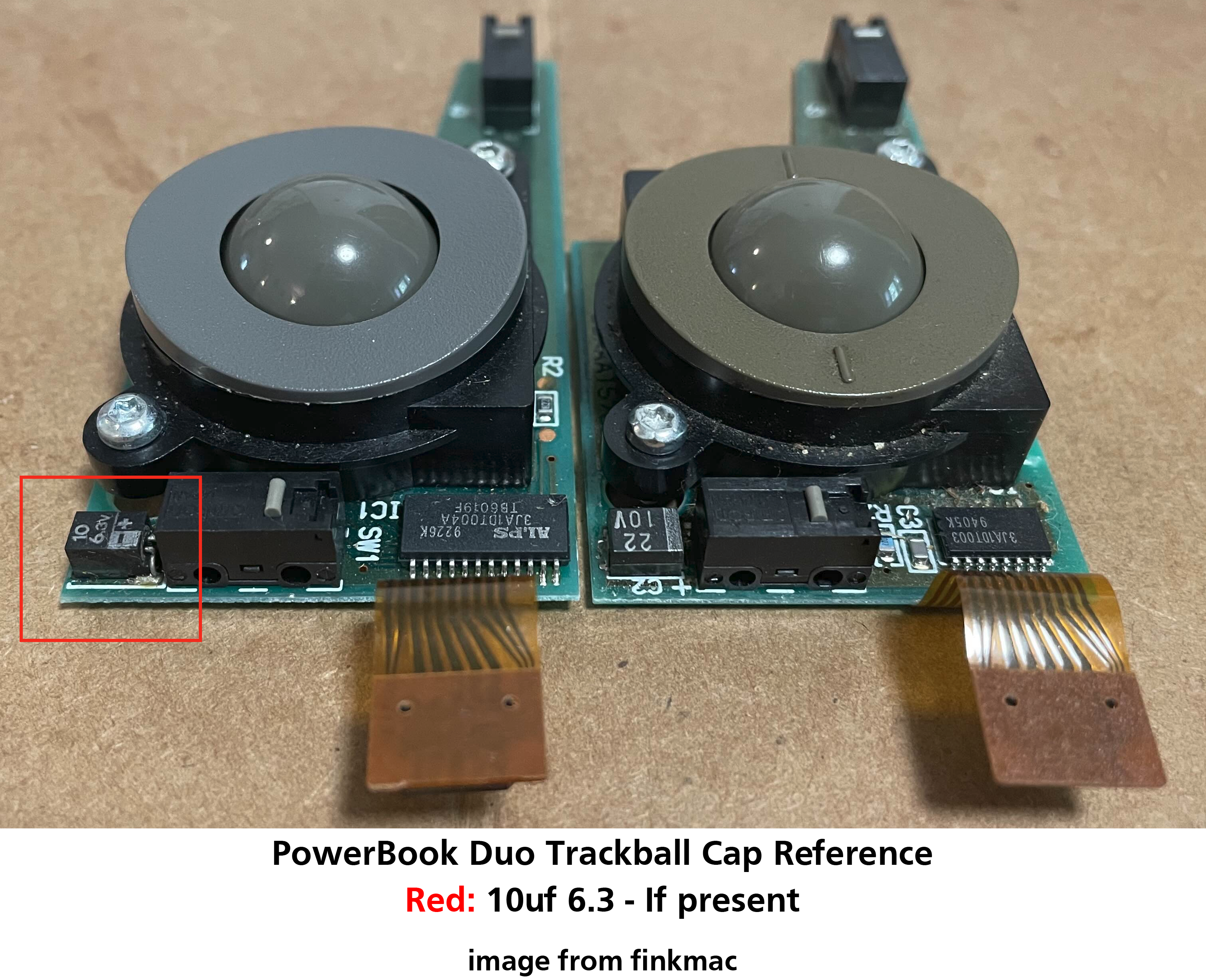
Earlier revisions of the Duo trackball have a single leaky cap on them - one of those "impostor tantalum" caps that's actually an electrolytic. The later revisions use a 22uf 10v tantalum cap instead.
| Value | Count | Type |
|---|---|---|
| 10uf 6.3v | 1 | Low Profile Surface-Mount Electrolytic |
Reference Image
Module on the left has the leaky cap, module on the right has the non-leaky tantalum cap.